Street Interview Marketing: The Complete Guide for UK Brands
Street interviews are the highest-converting format in short-form content right now. Here is everything UK brands need to know to run them well, and why they keep working.

Sarah Adams
20 July 2026 · 6 min read
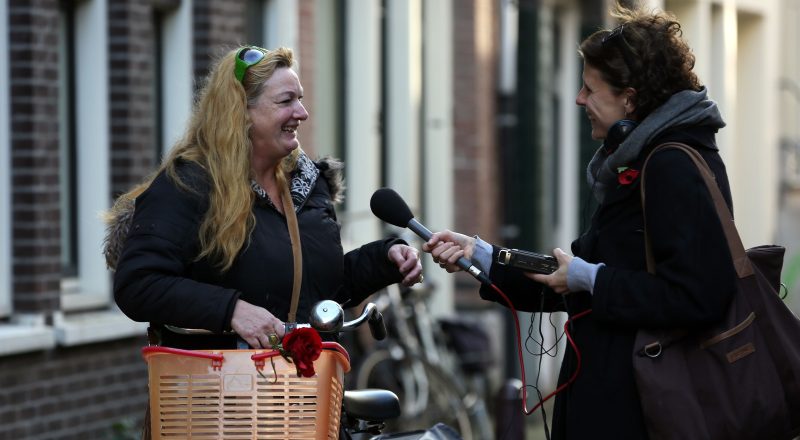
If you have spent any time watching short-form content in the last two years, you have seen the format. Someone stops a stranger on a busy London street, asks them something about money, careers, or their life, and the stranger's answer gets three million views.
That is street interview marketing. And for UK brands, it is currently one of the most efficient ways to generate awareness at scale without paying for ads.
We know this because we have run it for clients across finance, health, and lifestyle. Here is everything we have learned.
Why street interviews work
Most branded content fails because it feels like branded content. The viewer's brain recognises the format and skips before the first second is up.
Street interviews break that pattern. The format signals authenticity. A real person, on a real street, giving an unscripted answer to a question that genuinely interests them. The brand is the context, not the content.
The psychological mechanism is social proof at scale. When someone watches a stranger answer "How much do you spend in a month?" honestly and without embarrassment, they feel permission to wonder the same thing. The brand that asked the question gets associated with the insight, without ever having to claim authority.
There is something else happening too, which is less discussed. Branded content tries to persuade. Street interviews do not try to persuade anyone. They just let people talk. And because there is no persuasion attempt, the viewer's defences never go up. You cannot skip something that is not selling you anything.
The share is the real metric
Paid content works by interrupting someone and hoping your message lands before they skip. Street interview organic content works by becoming something people choose to watch, and share.
The share is the key multiplier. A polished brand ad gets zero shares. A short interview where someone says something genuinely surprising about their savings habits gets shared in group chats and reposted. That secondary distribution is free, and it tends to be worth more than the original view.
The algorithm loves it
Short-form algorithms are optimised for watch time and completion rate. Street interviews routinely outperform polished brand content on both metrics.
The hook is inherent: the question is the hook. Answers vary from person to person, so your audience does not tune out. And the conversation format triggers completion, because humans are wired to hear the end of a conversation. We feel genuinely uncomfortable stopping halfway through someone's sentence.
The formats that work best
Not all street interview formats perform equally. Based on our campaigns, these are the ones that consistently generate strong reach.
The knowledge gap
Ask a question that exposes a gap between what people think they know and what they actually know.
"Do you know what APR means?" "What do you think the average UK mortgage rate is right now?" "What percentage of your income do you save each month?"
The answer does not have to be embarrassing. It has to be honest. Honesty is what drives shares.
The opinion divide
Ask something where people genuinely disagree, and let the camera capture that disagreement.
"Is renting a waste of money?" "Should couples have separate bank accounts?" "Is a university degree worth it in 2026?"
These generate comments, which algorithms treat as engagement signals. More comments means more distribution.
The reveal
Ask a question, get an answer, then reveal something surprising.
"What would you do with an extra 500 pounds a month?" [Person answers] "What if I told you that switching your mortgage provider could save you exactly that?"
This format has the highest conversion rate because it creates a direct line from the content to the value proposition. It is also harder to execute. The reveal has to feel earned, not scripted.
How to do it in the UK
Street interviewing in the UK is different from the US, where the format originated. British people are more reserved. They are less likely to stop, less likely to overshare, and more likely to give one-word answers. These are all solvable problems.
Location matters more than you think
Canary Wharf works for finance and career content. The crowd skews professional, opinionated, and once they stop, willing to talk. Avoid Mondays before 9am and Fridays after 4pm.
Shoreditch and Brick Lane work for lifestyle, fashion, and food brands. Creative industries, younger demographic, higher stop rate.
Waterloo and London Bridge give you mixed demographics, commuters of all ages. Good for broadly applicable questions about money or lifestyle.
Covent Garden has the highest stop rate but the lowest conversion to interesting answers. Too many tourists, less stake in UK-specific questions.
The interviewer is everything
This is not a job for your marketing assistant. The person holding the microphone needs to be warm, quick, and comfortable with silence. They need to know when to ask a follow-up and when to let the answer breathe.
Former journalists, improv comedians, and experienced podcasters make the best street interviewers. The skill is interviewing, not presenting.
Consent and legal
In the UK, filming people in public is generally legal, but using their likeness in commercial content requires consent. We use recorded consent at the start of each interview, captured on camera before filming begins. Anyone who declines does not appear in the final content.
In practice, the stop rate in the UK is around 30 to 40 percent. Of those who stop, 80 to 90 percent will sign the release.
Connecting it to your brand
The most common mistake brands make with street interviews is over-branding. They put their logo on every frame, reference their product in every question, and wonder why the content performs like an ad. Because it is one.
The right approach is ambient branding. Your brand is present but not intrusive.
- A branded microphone flag or windshield, subtle but consistent
- A brand-relevant question, you are the mortgage company asking about mortgages
- A caption or overlay that links the insight back to your product
The viewer should not feel sold to. They should feel like they have learned something, and then discover that you are the brand that knows this stuff.
Street interviews are not a hack. They work because they are genuinely useful. They give viewers something real: honest answers to questions they are slightly afraid to ask. The brand that facilitates that honesty earns the association.
If you want to know whether street interviews would work for your brand specifically, book a call and we will tell you honestly.
Sarah Adams
Creative Strategist @ The Social Vision
Sarah leads creative strategy at The Social Vision, turning brand briefs into organic content engines. She has developed the street interview and platform-native formats behind some of our highest-performing campaigns.